Dog Breeds in English for Kids
A lesson on dog breeds in English for kids teaches names such as beagle, poodle, and husky, plus words for describing each dog. Children need not memorise every breed; they need words they can recognise, pronounce, and use in sentences. Pictures, movement, and guessing games suit school-age kids. Older learners can compare dogs and write fuller descriptions. This guide covers vocabulary, model phrases, age-based activities, practice, and error correction.
📥 Dog Breeds in English for Kids
Breed names, useful sentence frames, clear corrections, and a weekly practice plan
Leave your email — we'll send the PDF to your inbox.No spam — the PDF plus one short reminder. Unsubscribe anytime.
Core Breed Names and Useful Phrases
When teaching dog breeds in English for kids, show four or five vivid photographs at a time. The clues below cover visible features, though individual dogs differ. Use labelled pictures when accurate identification matters.
Pair each name with reusable phrases: “What breed is it?”, “It is a beagle,” “It has a short coat,” and “I think it might be a poodle.” The last pattern helps when identification is uncertain. Teach dog as the general animal word and breed as the named group. A mixed-breed dog may show features from different breeds.
Using Breed Words in Complete Sentences
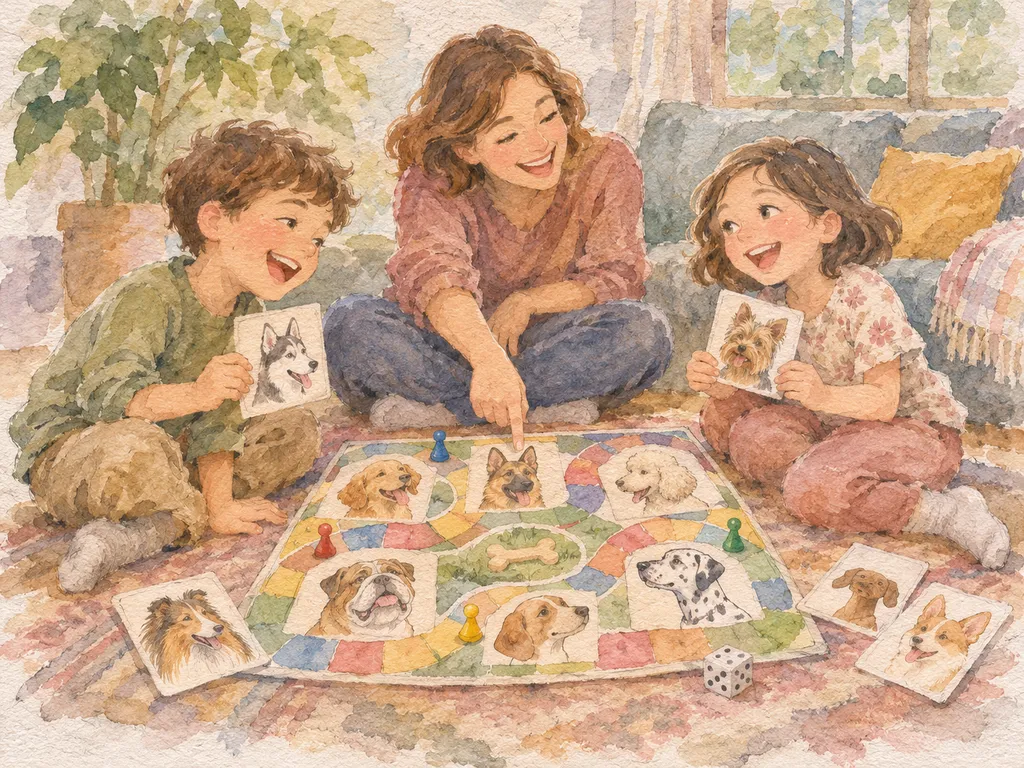
Practise dog breeds in English for kids through full sentence patterns, not isolated labels. Start with “It is a…” and “This dog is a…”. Add colour, size, coat, ears, legs, tail, and spots: “This dog is a Dalmatian. It has a white coat and dark spots.”
Questions prompt children to use the words. Ask, “Is it a pug or a bulldog?”, “Which dog has curly fur?”, or “What does the husky look like?” Accept one phrase first, then expand it: “A poodle” becomes “It is a poodle with curly fur.”
Older learners can compare breeds: “A Great Dane is taller than a beagle,” or “Both dogs have short coats, but their ears look different.” Base comparisons on visible photographs. Avoid assigning fixed behaviour to a breed because one dog cannot represent every dog in that group.
Activities for Different Ages
Activities help children recall dog breeds in English for kids by hearing, seeing, and using each name. Place four picture cards on a table. Say, “Show me the poodle.” School-age kids can point, lift the card, or make tall ears with both hands.
Next, play a clue game. One person chooses a card and says, “It has short legs and a long body.” The other guesses, “Is it a dachshund?” School-age learners can compare two photographs, sort breeds by visible features, or write a description without revealing the breed name.
Try It: Mystery Dog
Choose one breed from the table. Give three clues about its coat, ears, body, or tail without naming it. Your child asks one question, then guesses in a full sentence: “I think it is a beagle.” Swap roles for the next round.
Mixed-age families can keep the pictures but change the task. A younger child matches word and image. An older child spells the name, asks follow-up questions, or explains how two dogs differ. Siblings can practise together while producing answers suited to their levels.
Simple Practice at Home and Online
When practising dog breeds in English for kids, schedule short sessions across multiple days. On day one, introduce four cards. On day two, hide one and ask which breed is missing. On day three, mix old cards with two new ones. Finish by asking your child to describe one dog without reading.
Turn a toy dog, drawing, or photograph into a speaking prompt: “My dog has brown fur, long ears, and short legs. It might be a beagle.” Multilingual families can compare breed names briefly, then return to one complete English sentence.
Across LearnLink lessons, our experienced tutors can adapt the task to a child’s reading and speaking level. In a 1-on-1 lesson, a beginner may choose between two pictures; a confident learner can justify a choice, compare features, and ask questions.
Common Mistakes and Clear Corrections
Children may confuse breed with bread. Say breed so it rhymes with need, then practise the plural breeds. Certain names need rehearsal: beagle sounds like “BEE-guhl,” poodle like “POO-duhl,” and Chihuahua like “chih-WAH-wah.” Natural accents vary.
Check the sentence frame. Say “It is a husky,” not “It is husky,” when naming the breed. Add -s for more than one dog: “one beagle” and “two beagles.” Keep two-word names together, as in “golden retriever” and “German shepherd.”
Appearance clues are not firm rules. A border collie is not always black and white, and coat colour alone may not reveal a dog’s breed. Teach “I think…” or “It might be…” for uncertain answers. These phrases encourage accurate language and careful observation.
- Show three dog pictures and ask your child to name each breed aloud.
- Model the full sentence, then let your child repeat it with one correction.
- Contrast two similar breeds using clear clues such as size, coat, or ears.
- Write five breed names on cards and match them to the correct pictures.
- Revisit one mistake tomorrow and praise the corrected word or sentence.
When a word has several meanings or pronunciations, Cambridge Dictionary is a useful check before turning it into child-friendly examples.
Frequently Asked Questions About Dog Breed Names
How Many Breed Names Should My Child Learn at Once?
A first lesson on dog breeds in English for kids can cover four to six names. Revisit them through matching, listening, and speaking before adding more. If recall becomes slow or frustrating, retain the current set for another session. Older or experienced learners may handle a larger group.
Does My Child Need to Memorise Every Dog Breed?
No. Using a smaller set in complete sentences builds more skill than reciting a long list. Choose familiar, visually distinct breeds and practise coat, ears, legs, size, colour, and comparison words. Add new breed names when they appear in books, films, or daily life.
How Can a Multilingual Child Practise These Words?
Connect each English name with words your child knows in other languages. Then request an English phrase such as “The poodle has curly fur.” Other languages can support meaning while English remains the language of the final description or question.
What If My Child Is Nervous Around Dogs?
Use photographs, drawings, toys, or videos instead of meeting a live dog. Your child can learn the vocabulary and complete every activity without touching an animal. When practising near real dogs, stay with your child. Never approach or touch an unfamiliar dog without permission from the responsible adult.
Start your child's English journey today — book a trial lesson with LearnLink.
Stay updated on our latest tips and resources by following us on Instagram LearnLink.